Key Features to Look for in Travel Insurance
Choosing the best travel insurance for the USA isn’t just about picking the cheapest plan—it’s about understanding what actually protects you when things go wrong. Think of it like buying a smartphone. You wouldn’t just look at the price; you’d check the camera, battery life, storage, and performance. Travel insurance works the same way. The features inside the policy matter far more than the cost alone.
When comparing plans, you’ll notice a wide range of benefits listed in fine print. That’s where many travelers get overwhelmed or, worse, make the wrong choice. The trick is to focus on the features that directly impact your travel experience in the United States. Since the U.S. is known for its high costs and unpredictable travel conditions, your policy needs to be robust, flexible, and comprehensive.
A strong travel insurance plan should cover medical emergencies, trip disruptions, baggage issues, and emergency assistance services. But not all policies offer the same level of coverage. Some may include high medical limits but weak trip cancellation benefits, while others might focus heavily on travel delays and ignore emergency evacuation. That imbalance can become a problem when you actually need help.
Another important factor is coverage limits and deductibles. A plan might look attractive at first glance, but if the medical coverage is capped too low—say $50,000—it might not be enough for serious emergencies in the U.S. Ideally, you should look for at least $100,000 to $500,000 in medical coverage, especially if your trip involves physical activities or extended stays.
Also, don’t overlook customer support and claim processes. The best insurance providers offer 24/7 assistance, fast claims, and clear communication. Because let’s be honest—when you’re dealing with a delayed flight or a medical emergency in a foreign country, the last thing you want is complicated paperwork or slow responses.
Ultimately, the right features act like a safety net beneath your travel plans. You might never need them—but if you do, you’ll be incredibly glad they’re there.
Medical Coverage and Emergency Care
If there’s one feature you should never compromise on, it’s medical coverage. In the United States, healthcare costs are so high that even a minor incident can become financially overwhelming. This is why medical coverage forms the backbone of any reliable travel insurance plan.
A good policy should include coverage for hospitalization, doctor visits, prescription medications, and emergency treatments. But it shouldn’t stop there. Look for plans that also cover emergency medical evacuation and repatriation, which can be incredibly expensive if you need to be transported to another facility or back to your home country. These services alone can cost upwards of $50,000 to $100,000, depending on the situation.
Another key aspect is whether the insurance offers cashless treatment. This means the insurance provider pays the hospital directly, so you don’t have to worry about upfront costs. In a country like the U.S., where hospitals often require immediate payment, this feature can be a lifesaver—literally and financially.
Pre-existing conditions are another gray area. Some policies cover them under specific conditions, while others exclude them entirely. If you have any ongoing health issues, it’s crucial to read the fine print and choose a plan that accommodates your needs.
Also, consider whether the policy includes COVID-19 or infectious disease coverage, which has become increasingly important in recent years. Many insurers now include this as standard, but the level of coverage can vary significantly.
In simple terms, medical coverage isn’t just a feature—it’s the foundation of your travel insurance. Without it, everything else becomes secondary.
Trip Cancellation and Interruption Protection
Imagine spending months planning your dream trip to the United States—booking flights, reserving hotels, scheduling tours—only to cancel everything at the last minute due to an emergency. Without trip cancellation insurance, all that money could be lost in an instant.
This feature ensures you’re reimbursed for non-refundable expenses if your trip is canceled for covered reasons. These reasons typically include illness, injury, family emergencies, or even unforeseen events like natural disasters. It’s like having a financial undo button for your travel plans.
Trip interruption coverage works similarly but applies after your journey has already begun. If something forces you to cut your trip short—say a medical emergency or urgent situation back home—you can recover the unused portion of your trip and even get help with return travel costs.
Some premium policies also offer “Cancel for Any Reason” (CFAR) coverage, which provides even greater flexibility. While it’s more expensive, it allows you to cancel your trip for reasons not typically covered under standard policies. This can be especially useful in uncertain times when plans can change quickly.
Another overlooked benefit is coverage for travel delays. If your flight is delayed for several hours, insurance can cover meals, accommodation, and other expenses. Considering how common delays are in busy U.S. airports, this feature can save both money and stress.
In essence, trip protection coverage ensures that your investment in travel doesn’t vanish due to circumstances beyond your control. It’s about protecting not just your journey, but the time, effort, and money you’ve put into it.
Baggage Loss and Delay Coverage
Losing your luggage during a trip can feel like losing a part of your travel identity. Suddenly, you’re in a new country without clothes, essentials, or personal items. It’s inconvenient, stressful, and sometimes expensive to fix. That’s where baggage loss and delay coverage steps in.
This feature compensates you if your baggage is lost, stolen, or damaged during your trip. Depending on the policy, you can receive reimbursement for the value of your belongings, up to a specified limit. While it won’t replace sentimental items, it does help cover the financial loss.
Baggage delay coverage is equally important. If your luggage is delayed for several hours or even days, insurance can reimburse you for essential purchases like clothing, toiletries, and basic necessities. This ensures you can continue your trip without major disruptions.
However, it’s important to understand the limitations. Most policies have caps on how much they’ll pay per item and may exclude high-value belongings like electronics or jewelry unless specifically declared. That’s why it’s a good idea to check these limits before purchasing a policy.
Another helpful feature is assistance with tracking lost baggage. Many insurers work with airlines to help locate your luggage faster, reducing the stress and uncertainty of the situation.
In a country as large as the United States, where flights often involve multiple connections, baggage issues are more common than you might expect. Having insurance coverage ensures that even if your belongings go missing, your trip doesn’t fall apart.
Types of Travel Insurance Plans for USA
Not all travel insurance plans are created equal, and choosing the right type depends largely on how you travel. Are you planning a one-time vacation, or do you travel frequently throughout the year? Are you a student, a digital nomad, or a short-term visitor? Each scenario calls for a different kind of coverage.
Understanding the types of travel insurance plans for the USA helps you avoid overpaying or, worse, being underinsured. It’s like choosing the right pair of shoes—you wouldn’t wear hiking boots to a formal event or sandals on a mountain trail. The same logic applies here.
Single Trip Insurance Plans
Single trip plans are the most common type of travel insurance, designed for travelers taking a one-time journey to the United States. These plans cover you from the moment you leave your home country until you return.
They’re ideal for vacations, business trips, or short visits, offering comprehensive coverage for medical emergencies, trip cancellations, and other travel-related risks. One of the biggest advantages is simplicity—you pay once and get coverage for the entire duration of your trip.
These plans are also highly customizable. You can adjust coverage limits, add optional benefits, and tailor the policy to match your specific needs. This flexibility makes them a popular choice for first-time travelers.
Multi-Trip Annual Plans
If you travel frequently, a multi-trip annual plan might be a smarter choice. Instead of buying insurance for each trip, you get coverage for multiple trips within a year.
These plans are cost-effective for business travelers or frequent flyers who visit the U.S. several times. They typically include the same benefits as single trip plans but with added convenience and long-term savings.
Student and Visitor Insurance Plans
Specialized plans are available for students and long-term visitors. These policies are designed to meet visa requirements and provide extended coverage for medical and travel-related needs.
For students, coverage often includes mental health support, preventive care, and academic-related interruptions. Visitor plans, on the other hand, focus on medical emergencies and longer stays.
Best Travel Insurance Providers for USA
Choosing a provider can feel overwhelming because there are dozens of companies promising the “best” coverage. But here’s the truth—there’s no one-size-fits-all policy. The best provider for you depends on your travel style, budget, and specific needs. That said, some companies consistently stand out due to their reliability, coverage options, and customer support.
Let’s break down some of the top travel insurance providers for the USA that travelers trust worldwide. These companies have built strong reputations by offering comprehensive plans, transparent pricing, and efficient claims processes. Think of them as the “heavy hitters” in the travel insurance world.
SafetyWing
If you’re a digital nomad or long-term traveler, SafetyWing is often the go-to option. It’s designed with flexibility in mind, almost like a subscription service for travel insurance. Instead of committing to a fixed duration, you can pay every four weeks and continue coverage as long as you need.
One of the standout features of SafetyWing is its affordability. Compared to traditional insurers, it offers competitive pricing while still providing solid medical coverage. Plans typically include $250,000 in emergency medical coverage, which is sufficient for many travelers visiting the United States. It also includes coverage for COVID-19, which has become a standard expectation.
What makes SafetyWing unique is its simplicity. The signup process is quick, and you can even purchase coverage after your trip has started—something many insurers don’t allow. This flexibility makes it ideal for spontaneous travelers.
However, it’s not perfect. Coverage for trip cancellations and high-value items is limited compared to premium providers. So if you’re carrying expensive gear or planning a luxury trip, you might want to consider additional coverage.
Overall, SafetyWing feels like that reliable friend who’s always easy to deal with—affordable, flexible, and dependable for most situations.
World Nomads
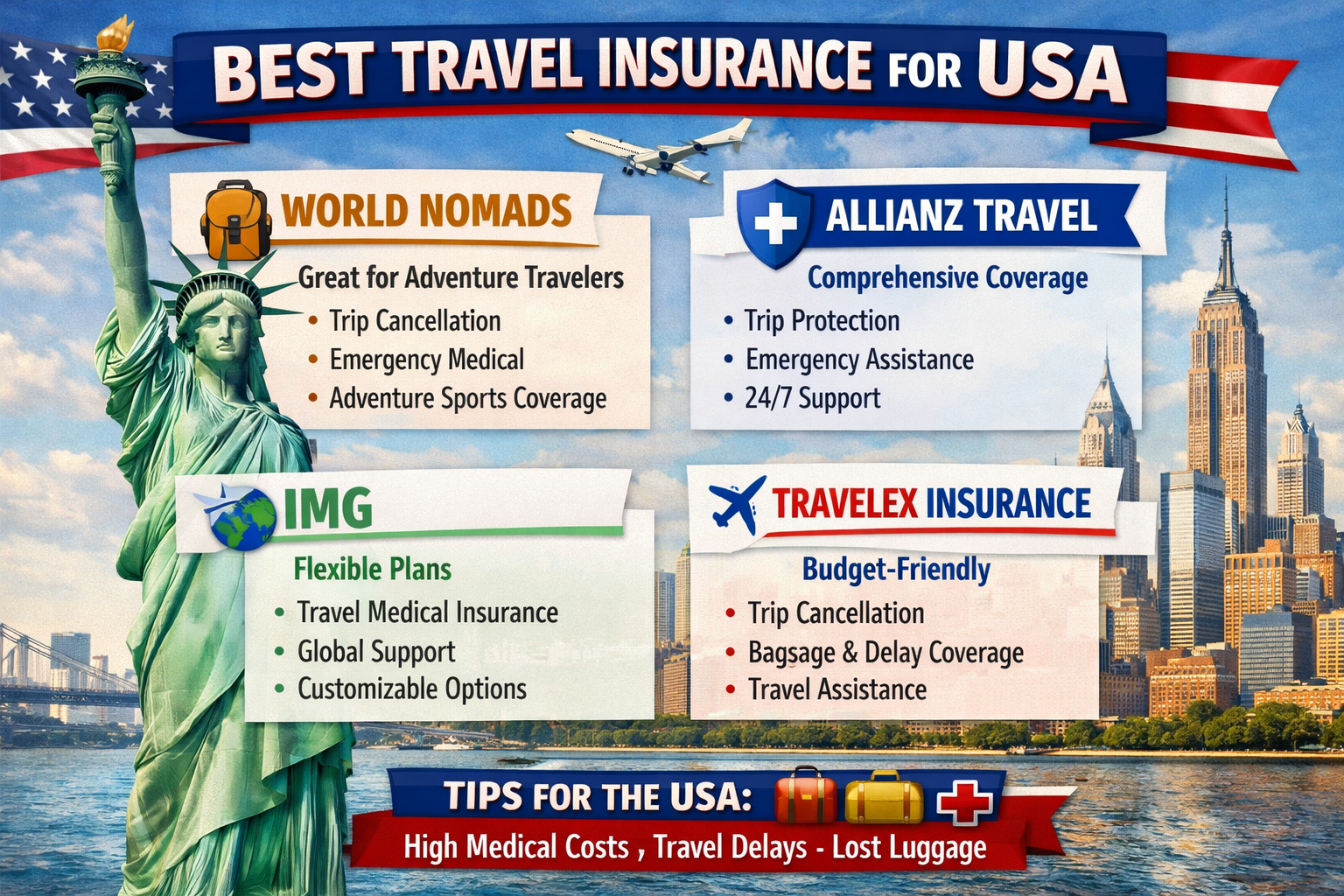
World Nomads has built a strong reputation among adventure travelers, and for good reason. If your U.S. trip includes activities like hiking, skiing, or even scuba diving, this provider is worth serious consideration.
What sets World Nomads apart is its extensive coverage for adventure sports and activities—something many standard policies exclude. Whether you’re exploring national parks or hitting the slopes in Colorado, you’re more likely to be covered.
The company also offers two main plans—Standard and Explorer—allowing you to choose the level of coverage that suits your needs. Medical coverage is robust, and emergency evacuation benefits are particularly strong, which is crucial in remote areas.
Another big advantage is the ability to extend your policy while traveling. So if you fall in love with your trip and decide to stay longer, you don’t have to start from scratch.
On the downside, World Nomads tends to be slightly more expensive than basic providers. But you’re paying for specialized coverage and peace of mind, especially if your itinerary includes high-risk activities.
In short, if your travel style leans toward adventure rather than relaxation, World Nomads is like having a safety harness on a mountain climb—it keeps you secure while you explore freely.
Allianz Travel Insurance
When it comes to reputation and global presence, Allianz Travel Insurance is a heavyweight. This company has been around for decades and offers a wide range of plans tailored to different types of travelers.
One of Allianz’s biggest strengths is its comprehensive trip protection coverage. From trip cancellations to delays and interruptions, their plans are designed to protect your financial investment. This makes them a great choice for travelers who’ve spent a significant amount on flights, hotels, and tours.
Medical coverage is also solid, though it varies depending on the plan you choose. Allianz offers both single-trip and annual plans, giving you flexibility based on how often you travel.
Customer service is another area where Allianz shines. With 24/7 assistance and a streamlined claims process, they’ve built a reputation for reliability. When you’re dealing with travel disruptions, having a responsive support team can make all the difference.
However, some travelers find their policies slightly more complex, with multiple tiers and options that can be confusing at first. But once you understand the structure, you’ll appreciate the level of customization available.
Think of Allianz as a well-established bank—trustworthy, structured, and built for long-term reliability.
IMG Global
IMG Global is another strong contender, particularly for travelers seeking high medical coverage limits. If your priority is protecting yourself against the high cost of healthcare in the U.S., this provider deserves a closer look.
IMG offers a variety of plans, including visitor insurance, student insurance, and long-term travel coverage. Many of their policies provide medical limits of up to $1 million or more, which is ideal for travelers who want maximum protection.
One standout feature is their focus on international travelers visiting the United States. Their plans are specifically designed to meet visa requirements and provide coverage tailored to the U.S. healthcare system.
IMG also offers flexible deductibles, allowing you to adjust your premium based on how much you’re willing to pay out of pocket. This makes it easier to balance cost and coverage.
That said, the claims process can sometimes be slower compared to more modern, tech-driven insurers. But the trade-off is higher coverage limits and more specialized plans.
If SafetyWing is the flexible friend and Allianz is the dependable institution, IMG Global is like a high-security vault—built to handle worst-case scenarios with maximum protection.
Cost of Travel Insurance for USA
Travel insurance pricing can feel a bit mysterious at first. Why does one plan cost $50 while another costs $200 for the same trip? The answer lies in the details—coverage limits, duration, traveler age, and risk factors all play a role.
On average, travel insurance for the USA costs between 4% to 10% of your total trip cost. For example, if your trip costs $3,000, you might pay anywhere from $120 to $300 for insurance. But this is just a rough estimate—the actual price can vary widely.
Factors That Affect Pricing
Several factors influence how much you’ll pay for travel insurance:
- Age of the traveler – Older travelers typically pay higher premiums due to increased health risks.
- Trip duration – Longer trips mean higher costs because the risk period is extended.
- Coverage limits – Higher medical and trip protection limits increase the premium.
- Destination – The USA is considered a high-cost destination, which raises insurance prices.
- Add-ons and extras – Features like adventure sports coverage or “Cancel for Any Reason” can significantly increase costs.
Understanding these factors helps you make smarter decisions. Instead of blindly choosing the cheapest option, you can tailor your policy to get the best value for your money.
How to Choose the Right Travel Insurance
Selecting the right policy isn’t about finding the “best” one—it’s about finding the right fit for your specific trip. Start by identifying your priorities. Are you more concerned about medical emergencies, or do you want strong trip cancellation coverage?
Comparing Policies Effectively
When comparing policies, focus on:
- Coverage limits (especially medical)
- Exclusions and fine print
- Deductibles
- Claim process and reviews
Reading customer reviews can provide valuable insights into how a company handles real-world situations. After all, a policy is only as good as its ability to deliver when you need it most.
Common Mistakes to Avoid When Buying Travel Insurance
One of the biggest mistakes travelers make is choosing a policy based solely on price. Cheap insurance often comes with limited coverage, which can backfire in emergencies.
Another common error is not reading the fine print. Exclusions, limits, and conditions can significantly impact your coverage. Skipping this step is like signing a contract without knowing what’s inside.
Travelers also tend to underestimate the importance of medical coverage, especially when visiting the USA. This can lead to serious financial consequences.
Tips to Save Money on Travel Insurance
Saving money doesn’t mean sacrificing protection. One smart approach is to compare multiple providers before making a decision. Prices and coverage can vary significantly.
You can also adjust your deductible to lower your premium. Just make sure it’s an amount you can afford in case of an emergency.
Another tip is to avoid unnecessary add-ons. Only pay for the coverage you actually need.
Conclusion
Traveling to the United States is an exciting experience, but it comes with unique risks—especially when it comes to healthcare costs and unexpected disruptions. Choosing the best travel insurance for the USA isn’t just about ticking a box; it’s about protecting your entire यात्रा experience from start to finish.
The right policy gives you more than financial protection—it gives you confidence. Confidence to explore, to try new things, and to enjoy your trip without constantly worrying about what could go wrong.
FAQs
1. Is travel insurance mandatory for the USA?
No, it’s not mandatory, but it’s highly recommended due to extremely high healthcare costs.
2. How much medical coverage do I need for the USA?
At least $100,000 is recommended, but $250,000 or more is ideal.
3. Can I buy travel insurance after arriving in the USA?
Yes, some providers like SafetyWing allow this, but options may be limited.
4. Does travel insurance cover COVID-19?
Most modern policies include COVID-19 coverage, but always check the details.
5. What is the best travel insurance for the USA?
It depends on your needs, but top providers include SafetyWing, World Nomads, Allianz, and IMG.